Inherited genetic variants help identify patients at higher risk of aggressive therapy-related blood cancers
A study led by researchers at the Josep Carreras Leukaemia Research Institute shows that inherited genetic differences can distinguish biologically different forms of therapy-related myeloid neoplasms, opening the door to more personalised diagnosis, risk assessment and clinical management.
Some patients develop aggressive blood cancers years after receiving chemotherapy or radiotherapy for a previous cancer. These conditions, known as therapy-related myeloid neoplasms (t-MN), are currently classified mainly according to a patient's treatment history, even though their clinical course can vary considerably from one person to another.
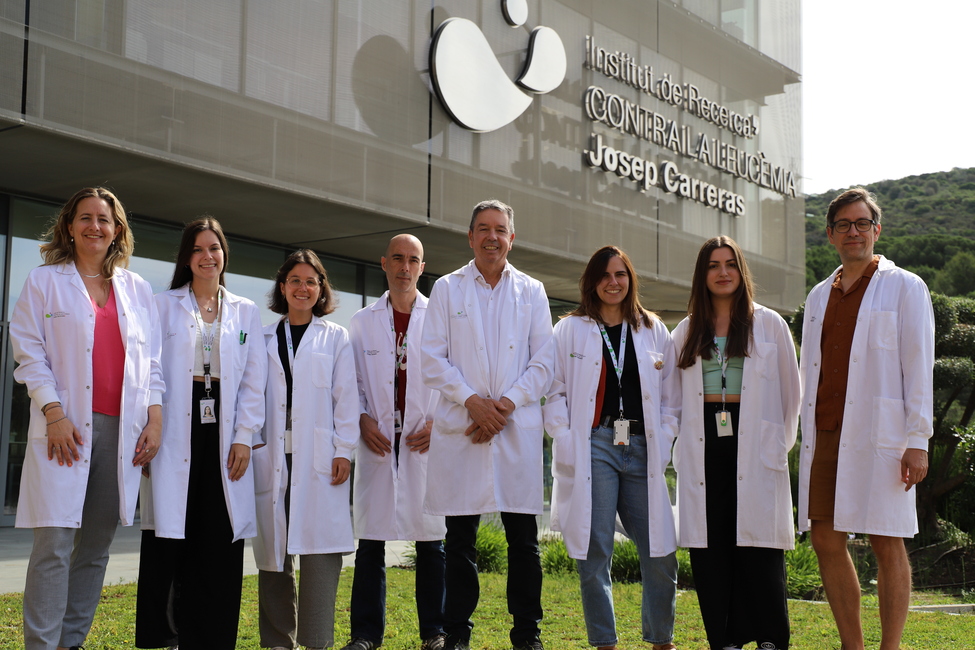
Now, a study led by researchers from the Josep Carreras Leukaemia Research Institute (IJC), published in Blood Advances, demonstrates that inherited genetic variants present from birth can help explain these differences. The work was led by Dr Francesc Solé, with Dr Oriol Calvete and Julia Mestre as co-first authors, in collaboration with researchers from hospitals and research centres across Spain (Grupo Cooperativo Español de SMD, GESMD) and the University of Texas MD Anderson Cancer Center (USA).
The researchers analysed the genetic and clinical data of 100 patients diagnosed with therapy-related myeloid neoplasms. They found that almost one in three patients carried an inherited genetic variant associated with cancer predisposition or blood disorders. Based on these inherited variants, patients could be divided into three molecular subgroups with distinct biological characteristics and clinical outcomes.
Patients carrying inherited variants in cancer predisposition genes were more likely to develop extensive chromosome abnormalities and alterations in the TP53 gene, features that are associated with a poorer prognosis. By contrast, patients with inherited variants linked to blood disorders, or those without detectable inherited variants, generally showed different molecular alterations and more favourable outcomes.
These findings suggest that inherited genetics plays a much more important role in therapy-related myeloid neoplasms than previously recognised. Rather than relying solely on information about previous chemotherapy or radiotherapy, incorporating germline genetic information could provide a more accurate way to classify patients and estimate their risk.
"Our findings show that inherited genetics play an important role in therapy-related myeloid neoplasms and can help identify patients with different levels of risk. Including germline genetic testing in the evaluation of these patients could improve disease classification, guide clinical decisions, and help identify individuals and families who may benefit from genetic counselling, closer monitoring, or preventive strategies before or after cancer treatment."
Julia Mestre, IJC researcher and first author of the study.
The study also revealed that chemotherapy exposure was particularly associated with poor outcomes among patients carrying inherited cancer-predisposition variants. In these patients, treatment was more frequently linked to complex chromosome abnormalities and TP53 alterations, helping to explain why some individuals develop especially aggressive forms of therapy-related disease.
Although additional studies will be needed before these findings become part of routine clinical practice, the work provides a framework for improving the management of patients who develop therapy-related myeloid neoplasms. Integrating inherited genetic testing into clinical evaluation could support more personalised treatment decisions, improve follow-up strategies and identify patients and relatives who may benefit from genetic counselling and surveillance.
About the study
The study, "Germline landscape stratification defines distinct molecular and prognostic groups in therapy-related myeloid neoplasms", was published in Blood Advances. It was led by researchers from the Josep Carreras Leukaemia Research Institute, with Oriol Calvete and Julia Mestre as co-first authors, and Francesc Solé (IJC) and Rashmi Kanagal-Shamanna (The University of Texas MD Anderson Cancer Center) as co-corresponding authors. The research involved a multicentre collaboration between institutions in Spain and the United States.
The study was supported by the Instituto de Salud Carlos III and a Joan Oró Predoctoral Fellowship from AGAUR, Generalitat de Catalunya.