Study led by researchers in Barcelona and Granada uncovers new therapeutic vulnerability in one of the most aggressive childhood leukaemia
A preclinical study led by the Josep Carreras Leukaemia Research Institute and the Centre for Genomics and Oncological Research at the University of Granada identifies a key mechanism underlying the progression of a subtype of childhood leukaemia and points to a potential new therapeutic strategy based on a drug already approved for other conditions.
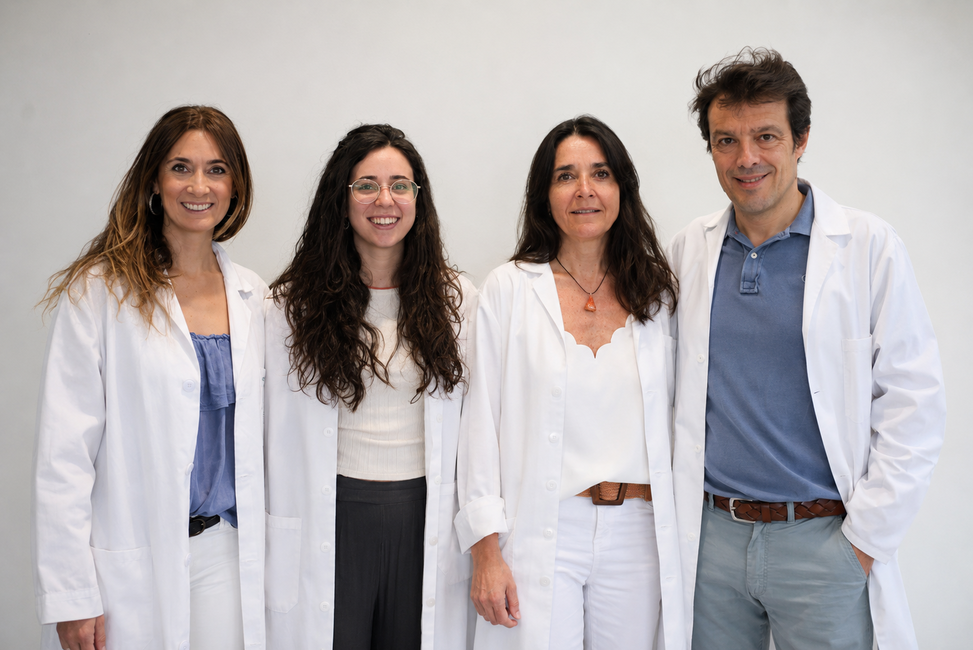
An international team led by the Josep Carreras Leukaemia Research Institute (IJC) in Barcelona and the Centre for Genomics and Oncological Research (GENyO) and the University of Granada (UGR) has identified a new biological vulnerability in one of the most aggressive forms of childhood leukaemia. The findings could pave the way for new therapeutic strategies for patients who currently have very limited treatment options.
The study, published in Blood, focuses on KMT2A-rearranged B-cell acute lymphoblastic leukaemia (B-ALL), a highly aggressive subtype that predominantly affects infants and very young children. Compared with other childhood leukaemias, this type is associated with higher relapse rates and significantly poorer survival outcomes than other types of childhood leukaemia.
Despite major advances in treatment over the past decades, including chemotherapy, haematopoietic stem cell transplantation and current immunotherapies, relapse remains a major clinical challenge and effective treatment options for these patients are limited.
The researchers found that the interaction between two proteins expressed on the surface of leukaemic cells plays is critical for cells’ ability to expand and sustain the disease. Blocking this mechanism significantly slowed leukaemia progression and enhanced the efficacy of conventional treatments in experimental models.
Notably, these effects were achieved using natalizumab, a monoclonal antibody currently approved for the treatment of autoimmune diseases such as multiple sclerosis and Crohn's disease.
The findings suggest that natalizumab could potentially be evaluated as an adjunctive therapy for patients with high-risk leukaemia, taking advantage of its extensive clinical use and well-established safety profile.
"Understanding the biological mechanisms that make certain leukaemias particularly aggressive is essential for developing treatments that are both more effective and less toxic," says Dr María Belén López-Millán, researcher at the Josep Carreras Institute, GENyO and UGR. "Our work identifies a new vulnerability in this disease and provides a strong foundation for future research."
The team hopes that these findings will help accelerate the development of more effective treatments for patients with very high-risk leukaemias. According to Dr Pablo Menéndez, senior author of the study and Head of the Paediatric Haematological Malignancies Research Programme at the Josep Carreras Institute and the Sant Joan de Déu Research Institute, "this work is a clear example of the transformative potential of collaboration between leading research centres, hospitals, patients, families and funding organisations can have in advancing biomedical knowledge."
Preclinical research: a first step towards future clinical applications
The researchers stress that these findings are based on preclinical studies using patient samples, cell-based models and animal models of the disease. Although the results are highly promising, natalizumab has not yet been evaluated in patients with this type of leukaemia. Further studies and future clinical trials will therefore be required to determine its safety and efficacy in this type of leukaemia before it can be incorporated into clinical practice.
At this stage, the findings presented here constitute a proof of concept for a promising new therapeutic approach, but do not yet represent a treatment available to patients.
About the study
The study, published in Blood, was led by research groups at the Josep Carreras Leukaemia Research Institute, GENyO and UGR. Alba Rubio-Gayarre is the first author, while Dr Pablo Menéndez, Dr Clara Bueno and Dr Belén López-Millán are the senior authors. The work brought together expertise in leukaemia biology, genomics, cell signalling, animal models and the development of novel therapies.
This research was made possible through the continued support of public institutions, foundations and philanthropic organisations committed to biomedical research and the fight against haematological diseases. The team is particularly grateful to the Héroes hasta la Médula association and dedicates this work to Alberto Merchant Cuevas and his family. The research was funded by the Josep Carreras Leukaemia Foundation, the Government of Catalonia through the CERCA programme, the Spanish Ministry of Science, Innovation and Universities, the Carlos III Health Institute (ISCIII), the European Union through the NextGenerationEU programme, the international Fight Kids Cancer initiative, the Deutsche José Carreras Leukämie-Stiftung, and other charitable initiatives aimed at advancing new therapies for children with cancer.
Rubio-Gayarre A, Vinyoles M, Tejedor JR, et al. NG2–ITGA4 Axis regulates Rho GTPases and Leukemic Aggressiveness in KMT2A-r B-ALL and is targetable with Natalizumab. Blood, 2026.