A Hidden DNA Genome Protector May Explain Why Health and Aging Differ Between Men and Women
Researchers from the Josep Carreras Leukaemia Research Institute and Mass General Brigham have identified SIRT7 as a key protector of the X chromosome and genome stability. The study, published in Nature, reveals how loss of SIRT7 disrupts gene regulation, causes DNA damage and affects females more severely than males. The findings provide new insight into the biological basis of sex differences in ageing and disease, with potential implications for blood cancer research.
How diseases develop and how the body ages can differ between females and males, but the biological reasons for these differences are not fully understood. Researchers are studying the role of sex chromosomes to better understand what may be driving these differences.
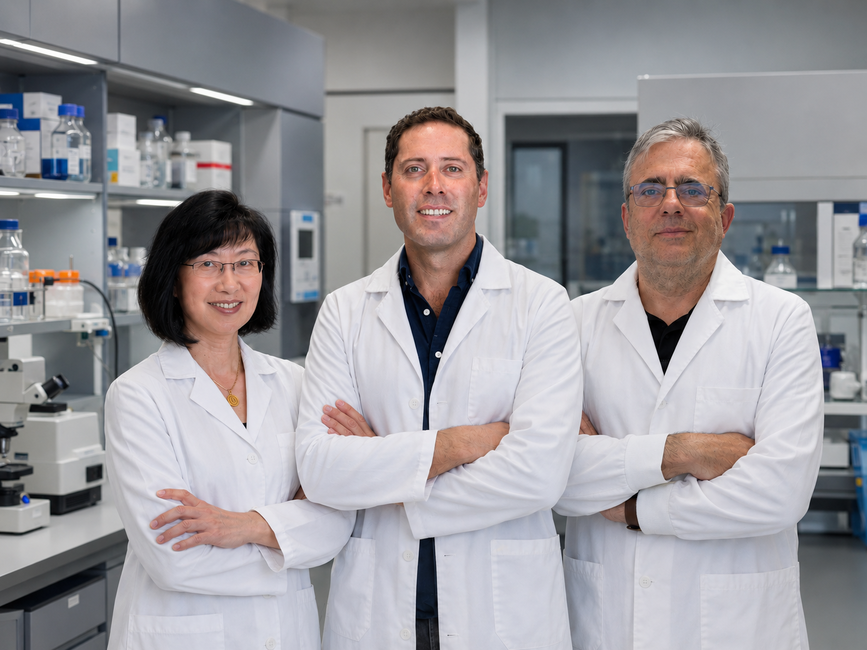
A collaboration led by Jeannie Lee, MD, PhD, an investigator at Mass General Brigham (MGB-Boston), and Alejandro Vaquero, PhD, an investigator at the Josep Carreras Leukaemia Research Institute (Barcelona), has now made a breakthrough towards understanding why there are such sex differences. In a study published in Nature, with Nicolas Simonet, PhD, as first author, the team found that SIRT7, a protein involved in how cells respond to stress and ageing, plays a critical role in maintaining the health of the X chromosome. This is especially important in females, who have two X chromosomes, compared with males who have one.
In female cells, one X chromosome is normally “turned off” to keep gene activity balanced. But the researchers found that when SIRT7 is missing, this balance breaks down. The inactive X chromosome becomes overly silenced. More surprisingly, the active X chromosome becomes too active. This overactivity disrupts normal gene regulation and makes the chromosome prone to DNA damage and genome instability.
These effects were strongest in females. In animal models, females lacking SIRT7 showed more DNA damage, poorer health and shorter lifespans compared with males.
The findings suggest that SIRT7 acts as a genetic safeguard, keeping the active X chromosome stable and its gene activity in check. Without it, the delicate balance that cells rely on is lost.
This research provides new insight into why ageing, disease risk and biological responses can differ between sexes. By uncovering how the X chromosome is regulated, the study may help inform future approaches to understanding and treating conditions that affect females and males differently.
Implications for Blood Cancer Research
The findings of this study are particularly relevant to immune function, as proper X chromosome regulation is essential for maintaining the balance of the immune system. Alterations in X chromosome activity can influence how blood and immune cells develop and function, potentially contributing to immune dysregulation and to the sex differences observed in susceptibility to certain diseases. In this sense, this connection may also be relevant to blood cancers, where the normal development and function of blood and immune cells are disrupted. For example, recent studies have shown that deregulation of X chromosome is associated with highly aggressive and fatal outcomes for female lymphoma patients. Moreover, a previous study from Alejandro Vaquero's laboratory had already shown that SIRT7 helps maintain the activity of PAX5, a gene that plays a key role in blood cell development and is frequently altered in leukemia.
Together, these findings suggest that SIRT7 plays a broader role in controlling the functions in blood and immune cells and their malignant transformation, helping to ensure that these cells function properly and protecting them from genetic changes that can contribute to the development of blood cancers.
“Our previous studies showed that the protein SIRT7 helps maintain the activity of genes that are essential for normal blood cell development and are frequently altered in leukemia. By revealing a new role for SIRT7 in protecting chromosome stability, this work broadens our understanding of how changes in this protein may affect immune system regulation and contribute to blood cancers.”
Dr. Alejandro Vaquero, Group Leader at the Josep Carreras Leukaemia Research Institute
About the study
The study “SIRT7 Regulates Dosage Compensation and Safeguards the Female X Chromosome”, published in Nature, was first-authored by Dr. Nicolas Simonet and an international team spanning the Josep Carreras Leukaemia Research Institute, the Mass General Brigham, the Autonomous University of Barcelona, the Rutgers University, the Centre for Genomic Regulation and the City University of New York. The study was supported by the Spanish Ministry of Science, Innovation and Universities, the American National Institutes of Health (NIH) and the Catalan Agency for Management of University and Research Grants (AGAUR).
Simonet, N.G., Thackray, J.K., Kesner, B. et al. SIRT7 regulates dosage compensation and safeguards the female X chromosome. Nature (2026). https://doi.org/10.1038/s41586-026-10645-x