Understanding cancer through the lens of dynamic Spatial Hallmark Ecosystems
Researchers at the Josep Carreras Leukaemia Research Institute propose a new view of cancer based on Spatial Hallmark Ecosystems and its evolution during cancer progression. This conceptual framework combines the latest spatial single cell technologies with classical genomics and proteomics, to move from a static cancer view towards a more complex, dynamic, phenotype-driven model able to inspire new therapeutical opportunities.
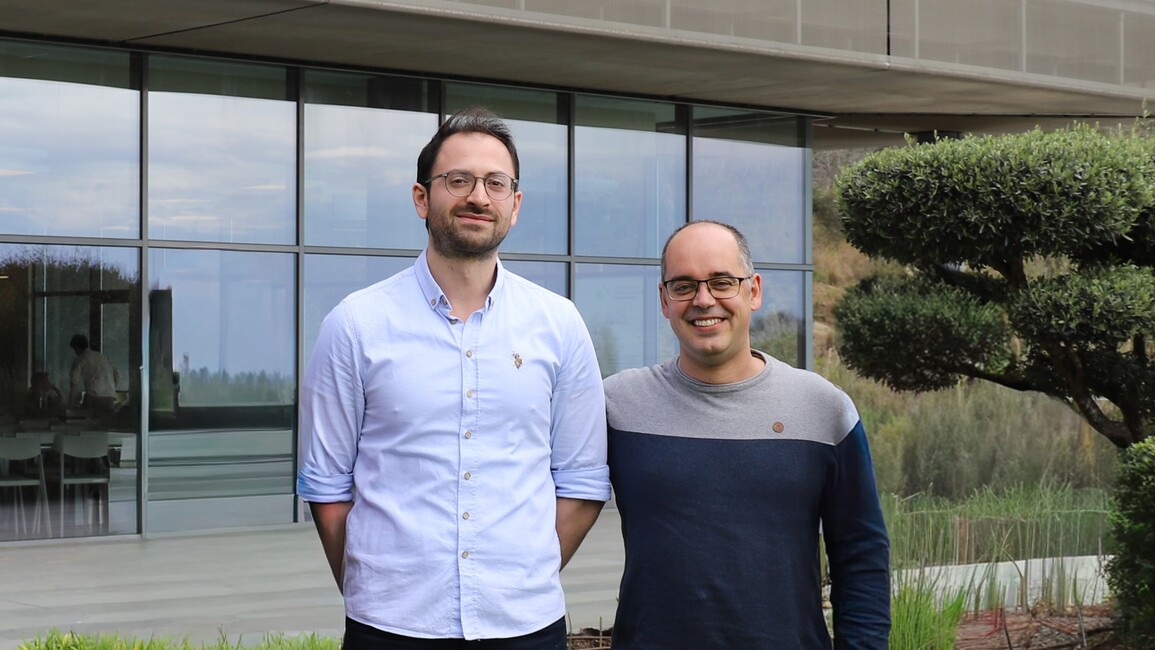
“Cancer cells are not static representations of malignancy, but rather they are dynamically involved with their surrounding microenvironment”. This statement by Dr Mustafa Sibai, researcher at the Cancer Immunogenomics laboratory at the Josep Carreras Leukaemia Research Institute, frames the emerging vision about cancer in the research community.
For decades, cancer has been seen from a gene-centric perspective, under the assumption that mutations determine the malignant course of a cell. Therefore, research has been focused on finding new genes driving malignancy when altered, and ways to suppress them. This led to an ever-growing list of genes and mutations related to the onset and progression of all kinds of cancer types. The outcome: You can’t see the forest for the trees.
In the last few years, a new framework has taken over: since cellular functions, the phenotype, arise from hierarchical interactions of groups of genes, assessing functionalities could be a much simpler way of understanding what a cell does. Under this view, large lists of genetic mutations can be expressed as shorter and more meaningful descriptions of cellular functions leading to malignancy. These abnormal functions are called “Hallmarks of Cancer” and describe things tumours need to do to become malignant, like “evade immune attack” or “activating invasion and metastasis”. The Hallmarks of Cancer help us see the forest again.
Hallmarks make it simpler, but they are still a static vision of cancer. The new framework proposed by Dr. Eduard Porta and Dr. Mustafa Sibai, together with researchers from Austria and the UK, “allows us to move from viewing cancer as a static model to a dynamic ecosystem whereby the functional unit of selection becomes how this ecosystem changes over time”, according to Sibai. The core elements of the new framework have been recently published at the leading scientific journal Trends in Cancer.
This view adds an extra layer of insight into cancer progression and can answer questions the classical view can’t. As Sibai explains, “Static understanding implies that we just get an idea of what the tumour is doing, but not where and when these changes occur”, and adds an example: “why do pre-malignant states exhibit groups of cells with critical mutations, but there is no visible tumour yet? under this new lens of spatio-temporal hallmark ecosystem, it means that probably these tissues have not yet undergone the tipping point in the functional properties of this ecosystem”.
A deep understanding of how the different cellular populations within a developing tumour interact with each other may anticipate whether they are fit for malignant expansion or not, giving clinicians a window of opportunity to intercept cancer progression before it starts.
This new model will be validated with real-world data in the coming months using large cohorts of patients with pre- and post-treatment information. When fully operational, it will help clinicians understand their patients’ tumours much better, “enabling them to ask questions such as which ecosystems have changed and which particular niches should they target, instead of which specific gene is just expressed”, in Sibai’s words.
Combined with the right tools, and integrating large scale sampling with the help of AI, this framework will provide sophisticated biomarkers that represent the complex nature of tumours, allowing clinicians to find the right treatment for every patient faster. Sibai points out that “these kinds of biomarkers are going to be very new for clinicians, but they will be providing the extra layer that is missing and genomics hasn't been able to give in the past”.
This research has received funding from the Spanish Ministry of Science, Innovation and Universities, the FERO-ASEICA Foundation and “la Caixa” Foundation. No generative AI tools have been used in this news piece.
Reference Article: Mustafa Sibai, Martin Zacharias, Nicholas McGranahan, Mariam Jamal-Hanjani, Eduard Porta-Pardo. "Cancer in 4D: toward Spatiotemporal Hallmark Ecosystems". Trends in Cancer, 2026, ISSN 2405-8033, https://doi.org/10.1016/j.trecan.2026.01.004.